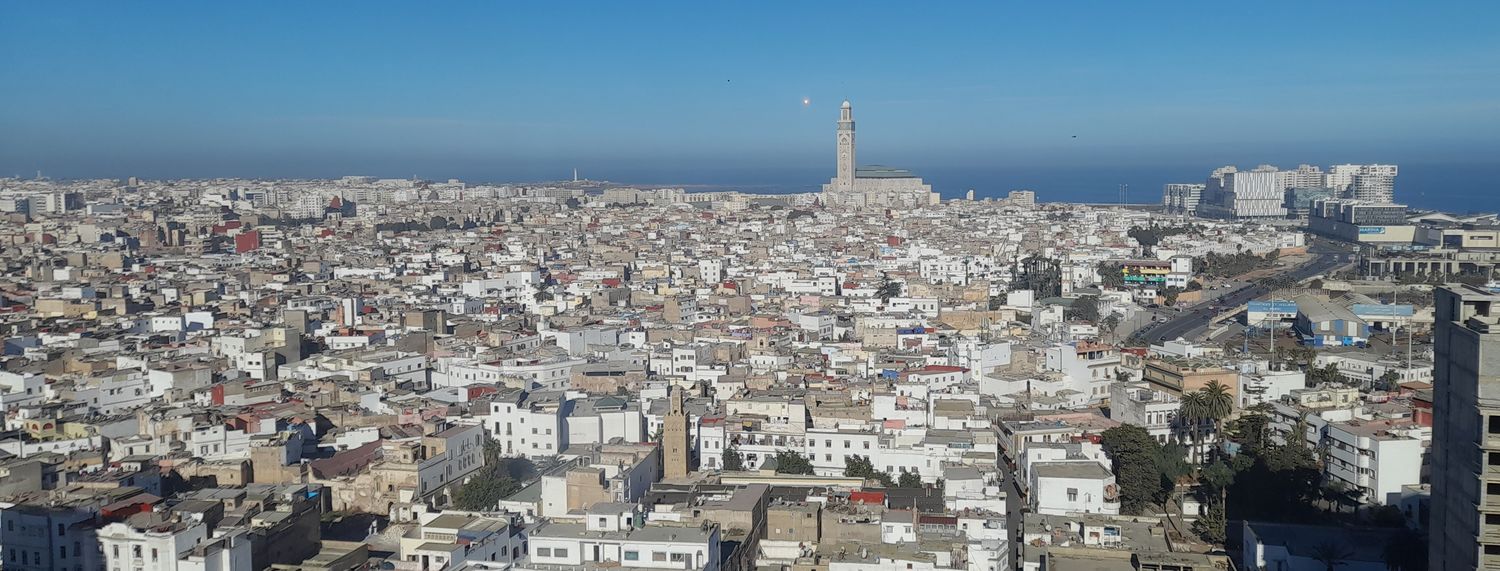
Morocco counts this money carefully and has a name for the people who send it: Marocains Résidant à l'Étranger, MRE, a formal category with its own institutions, bank products and government fund. The Office des Changes records 122.0 billion dirhams in 2025 against 119.0 billion in 2024 — a record, but the fourth year running that growth has slowed, from about 16% in 2022 to 2.6% now. A flow this size that has stopped compounding is its own signal about the generation now sending it.
Two things make this corridor different from the others on this site. The state offers a direct cash subsidy for investing, not just a savings product. And the paperwork that protects your exit has to be done at the beginning, not when you want to sell.
Where Moroccans abroad can actually put money
MDM Invest — a grant, not a loan
The Fonds de promotion des investissements des Marocains du Monde pays a non-repayable subsidy worth 10% of the MRE's share of a project, capped at 5 million dirhams, alongside bank financing. The conditions are specific and worth reading before you get excited: the total investment must exceed 1 million dirhams, you must put in at least 25% yourself in foreign currency, and it is paid in two halves — 50% when work actually starts and 50% once the planned jobs exist. Eligible sectors are industry and industry-related services, education, hospitality and health. Property development, buying housing, land not tied to the project, and deep-sea fishing are all excluded, which tells you exactly what the fund is for: it wants factories and clinics, not flats. You need a residence permit, foreign identity card or valid consular card to qualify.
The convertible dirham account, and the exit you set up on day one
An MRE receives and holds money through a convertible dirham account at a Moroccan bank: foreign currency comes in, converts to dirhams, funds property, a business or financial investments — and, critically, the balance can be converted back and sent abroad again. The mechanism that makes that work is registration. An investment made through these rails and declared to the Office des Changes carries a transfer guarantee, the right to repatriate capital and gains later. Money that arrives some other way, or a purchase nobody registered, does not have it. This is the same trap as Colombia's registration rule and India's NRE-versus-NRO choice: the exit is decided at the entrance, and years later there is no retrospective fix.
Property, which is where most of it still goes
For an MRE there is no particular restriction on urban residential or commercial property — you buy as a Moroccan does, because you are one. Agricultural land in rural areas is the exception and is governed by its own rules, so anyone imagining a farm should take advice before making an offer rather than after. The recurring failure in this corridor is not the law but the process: buying through a relative, on a handshake, with nothing registered at the Office des Changes, and discovering a decade later that the money is legally in Morocco to stay.
Property — the default, and its fine print
A Moroccan abroad, including a dual national, buys urban residential and commercial property without the restrictions that apply to foreign nationals elsewhere on this site. Agricultural land in rural areas is the real limitation and carries specific rules. The part people skip is administrative rather than legal: fund the purchase through a convertible dirham account and declare the investment to the Office des Changes, because that is what creates the guarantee that sale proceeds, rent and inheritance can leave the country later. Registered title in your own name, and the paperwork done at purchase — not the day you decide to sell.
Startups and angel investing
Casablanca has a genuine startup scene and Morocco has been deliberate about attracting capital to it, but for a diaspora investor the more interesting fact is MDM Invest: the state will co-fund a real business, in industry, education, hospitality or health, with a grant rather than a loan. That is a different proposition from an angel cheque and it suits the profile of much of this diaspora — a family in Lyon or Málaga with operating experience and a specific idea, rather than a portfolio investor. If you are writing small equity cheques instead, the convertible-account and registration mechanics above are what determine whether you can ever get the proceeds out, so set them up first.
For the mechanics — vehicles, tickets, syndicates, taxes at exit — start withdiaspora angel investing explained.
The growth number is the thing to sit with. Transfers rose about 16% in 2022 and 2.6% in 2025, and a plateau in a flow this large usually means the second and third generation abroad send less than their parents did — they have fewer people left to support. If your own plan assumes family in Morocco will keep managing things at that end, check that assumption against your actual family. And the standard corridor failure applies with full force here: an unregistered purchase, made through a relative because it was quicker, is a decision about the next twenty years and not about this month.