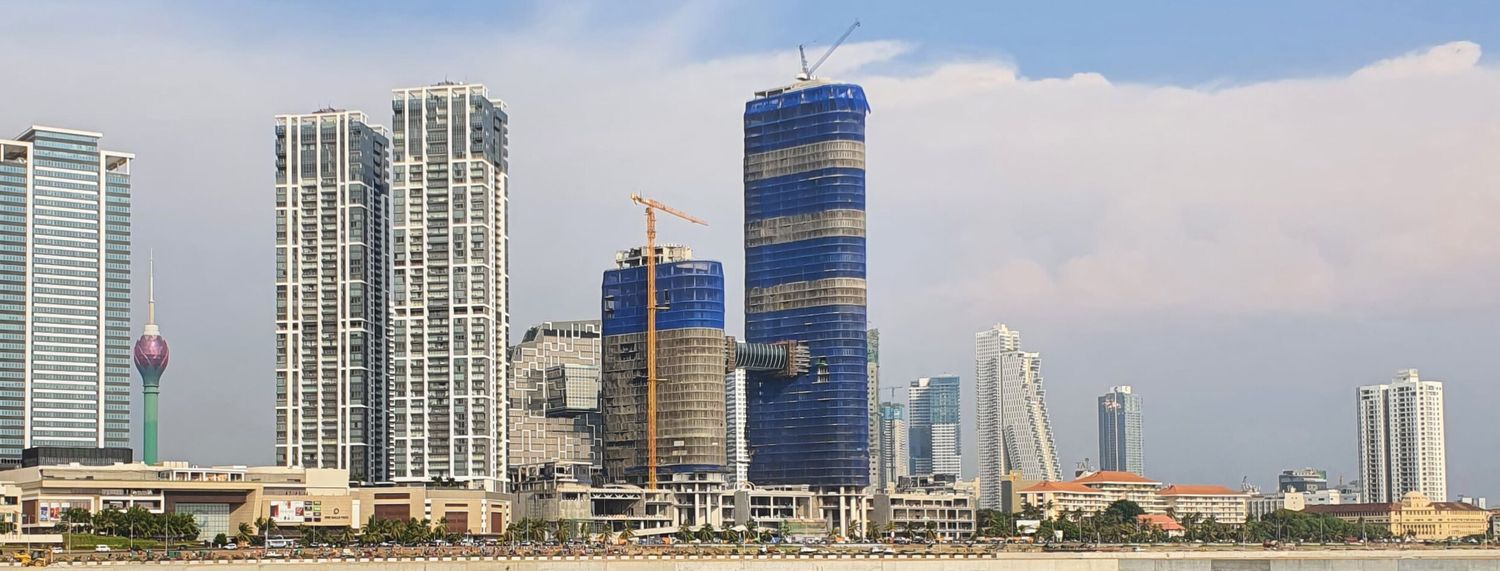
The money came back before the confidence did. Remittances hit an all-time high of $8.08 billion in 2025 after $6.58 billion in 2024, and December alone set a monthly record. The Gulf still leads — the UAE, Kuwait and Saudi Arabia — with the UK, Italy and increasingly South Korea behind them. Read the UK and US lines carefully: the Central Bank notes that both are inflated by money routed through them from elsewhere, so they overstate how much is really being earned there.
For a Sri Lankan abroad the sequence matters more than the product. Dual citizenship decides what you are allowed to own, and two different accounts decide whether money can leave again. Get those right and the rest is ordinary. Get them wrong and you own something you cannot sell out of.
Where Sri Lankans abroad can actually put money
Dual citizenship — what decides what you may own
This is the equivalent of India's NRI status or Nepal's NRN card, and it changes the rules more sharply than either. Under the Citizenship Act there are two routes: resumption (section 19(2)) if you already lost Sri Lankan citizenship by naturalising elsewhere, and retention (section 19(3)) if you are applying before you naturalise. Applications go to the Department of Immigration and Emigration or a Sri Lankan mission, they are not accepted by post, and an in-person interview is part of the process. Whether it is worth the trouble is answered in the property section below: a dual citizen buys land like any citizen, a foreign national mostly cannot buy land at all.
Two accounts, and they do different jobs
The PFCA — Personal Foreign Currency Account — is the savings rail, and it has quietly absorbed the alphabet people still use: NRFC, RFC, RNNFC and NRNNFC accounts are all PFCAs now, so if a relative or a bank branch tells you to open an NRFC, that is the account they mean. The IIA — Inward Investment Account — is the investment rail, and it is the one that matters for getting money back out. Sri Lankan citizens resident abroad and non-nationals of Sri Lankan origin can use it to buy shares including on the Colombo Stock Exchange, to hold debt securities, and to lend to Sri Lankan companies on three-year-plus tenors, with proceeds repatriable. Both sit under the Foreign Exchange Act No. 12 of 2017. Investment money that arrives through the wrong account is the classic way a return gets stuck.
Government paper, and what happened to the last holders
Sri Lanka suspended payments in April 2022 and defaulted in May. The part that concerns this audience directly is the domestic side: the Sri Lanka Development Bonds, US$1.4 billion of dollar-denominated government paper and precisely the instrument a non-resident Sri Lankan was most likely to hold, were pulled into the Domestic Debt Optimisation programme that parliament approved on 1 July 2023 and exchanged. On the external side, roughly US$14.2 billion of international sovereign bonds were restructured from September 2024 with a 28% cut to principal. The country exited default on 20 December 2024 and Fitch moved it to CCC+. Government paper here is not a savings account with a better rate, and the last three years are the evidence.
Property — the default, and its fine print
The rule that catches people: under the Land (Restrictions on Alienation) Act No. 38 of 2014, foreign individuals — and companies half or more foreign-held — cannot acquire land and buildings in Sri Lanka. Dual citizens are exempt from that restriction altogether, which is the single strongest argument for going through the citizenship process before buying anything. A foreign national who has not, has one real door: the 2018 amendment allows purchase of a condominium parcel where the full value is paid upfront by foreign remittance. Financing splits the same way — dual citizens and non-resident Sri Lankans can take a mortgage from a local bank, foreign nationals cannot. Decide your status first, then look at property, never the other way round.
Startups and angel investing
Colombo's startup scene is small and the capital is scarce, which is the ordinary shape of a diaspora opportunity: a professional in London or Melbourne brings a cheque and a market the founder cannot reach. The mechanics are the IIA, which explicitly covers acquiring shares in Sri Lankan companies and lending on three-year tenors, so an equity cheque or a convertible has a legal path in and out. What Sri Lanka does not yet have is an organised diaspora angel network of the kind Nigeria or India built — no verified body of that sort turned up, so treat introductions and regional syndicates as the practical route and be honest with yourself that you are early.
For the mechanics — vehicles, tickets, syndicates, taxes at exit — start withdiaspora angel investing explained.
Sri Lanka is a country that recently restructured its debt, including the dollar bond its diaspora held. That is not a reason to avoid it — it is a reason to price it. Assume a genuine sovereign and currency risk in anything denominated in rupees or issued by the state, keep the investment money on the account that lets it leave, and be sceptical of any Sri Lankan opportunity being sold to you on family standing rather than paperwork. And the recurring trap of this corridor specifically: buying land before sorting citizenship, then discovering the purchase sits in a relative's name because yours was not eligible.